Wantagh, NY · Located at Shell
Brake Repair in Wantagh, NY
Brake inspections, pad and rotor service, and repair of brake system problems.
Your brakes are the one system on the car you genuinely cannot defer. A noise you can live with for another month on an exhaust pipe is a different proposition when it appears under braking — and brake problems rarely improve on their own.
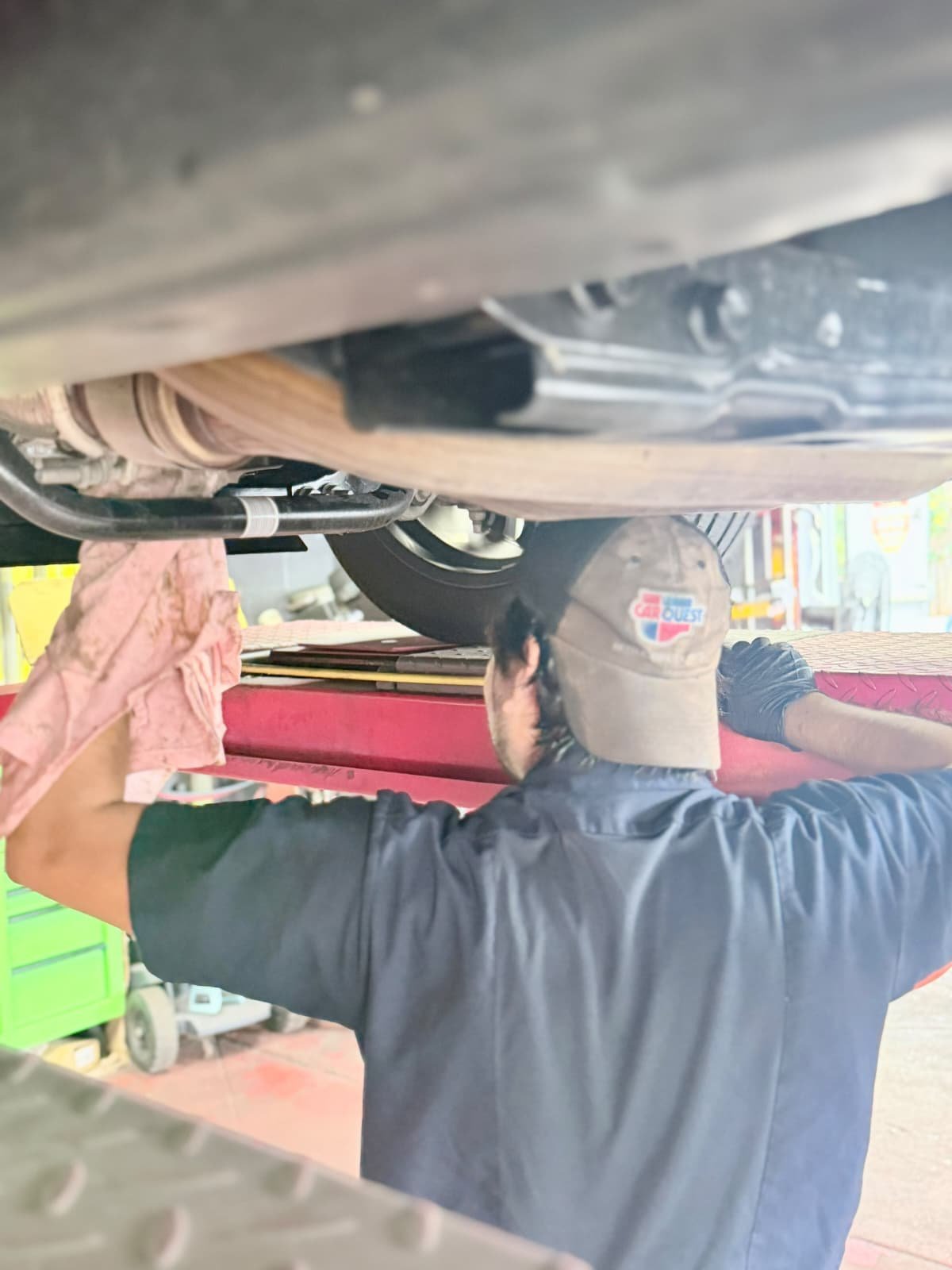
At Bilal Auto Repairs, brakes are one of the most common jobs that come through the shop. Drivers bring vehicles in when they hear something, when the pedal starts to feel different, or when a warning light appears on the dash. We inspect the system and explain what we find before any work begins.
Warning Signs
Symptoms Worth Paying Attention To
These are the things drivers most often notice before they come in. None of them identifies a specific fault on its own — that takes an inspection — but a change in how your vehicle behaves is worth acting on.
Squealing or squeaking
A high-pitched squeal when you press the pedal is one of the most common brake complaints. It can come from a wear indicator built into the pad, which is designed to make noise before the pad is fully spent — but it can also come from other sources, so it needs looking at rather than assuming.
Grinding
A metal-on-metal grinding sound is more serious than a squeal and usually means the friction material has worn through. Grinding is one of the few symptoms worth stopping to have checked promptly rather than scheduling for later in the week.
A soft or spongy pedal
If the pedal sinks further than it used to, or feels soft rather than firm, that is a change worth investigating. A spongy pedal can point to air or moisture in the hydraulic system, a fluid leak, or a failing component.
The car pulls while braking
If the vehicle wants to steer left or right when you brake, one side may be working harder than the other. Uneven braking can come from the brakes themselves, or from uneven tire pressure or alignment issues elsewhere.
Vibration through the pedal or steering wheel
A pulsation you feel through the pedal, or a shimmy through the wheel while braking, often relates to uneven rotor surfaces. It is a symptom worth diagnosing rather than treating as a nuisance.
A brake warning light
The brake warning light on the dash can indicate several different things — a parking brake left engaged, low fluid, or a fault in the system. Which one it is depends on the vehicle, so the light itself is a starting point rather than a conclusion.
Longer stopping distances
If the car takes noticeably more room to stop than it used to, that is a change in the way the vehicle performs — and performance changes under braking deserve attention.
We can’t diagnose a specific vehicle from a description online. If you’re noticing any of the above, the useful next step is an inspection.
What’s Involved
How This Service Works
- Inspection first
- Before anything is replaced, the brake system gets looked at: the pads and rotors, the calipers, the fluid, the lines, and the related hardware. What we recommend comes from what the vehicle actually needs rather than from a fixed list.
- Pads and rotors
- Brake pads are the friction material that presses against the rotor to slow the car; they wear down with use and are designed to be replaced. Rotors are the discs the pads clamp against, and they can wear, warp, or become uneven over time. Both are common service items.
- The hydraulic system
- Brakes work by hydraulic pressure — fluid pushed through lines to the calipers. That means the condition of the fluid, the lines, and the related components matters as much as the pads do. Brake fluid absorbs moisture over time, which is why it is checked during service.
- Explaining what we found
- Brake jobs vary in scope depending on the vehicle and what has worn. We explain what we see, what it means, and what the options are, in plain language — so you can make the decision yourself.
Why Bilal Auto Repairs
A Shop Built on Trust
When customers find a mechanic they trust, they come back. Reviews for Bilal Auto Repairs repeatedly mention honesty, professional service, fair pricing, and long-term relationships.
- Honest Recommendations
- We tell you what your vehicle actually needs — and what it doesn't.
- Fair Pricing
- Reviewers describe our pricing as reasonable and fair. You'll know what you're paying for before work begins.
- Quality Work
- Professional workmanship, whether it's routine maintenance or a more involved repair.
- Relationships That Last
- Customers come back, and they send their friends and family.
ASE Certified
Bilal, the shop’s owner, is certified by the National Institute for Automotive Service Excellence.
Local Service
Brake Repair in Wantagh, NY
Bilal Auto Repairs is on Jerusalem Avenue in Wantagh, at the Shell station — a short drive for drivers across Nassau County and the surrounding Long Island area. If you’re nearby and your vehicle needs attention, you can request service online or call the shop directly.
Common Questions
Brake Repair FAQs
How do I know if my brakes need repair?
The most common signs are squealing, grinding, a soft or spongy pedal, vibration through the pedal or steering wheel while braking, the car pulling to one side, a warning light, or a noticeable increase in stopping distance. None of these on its own confirms a specific fault — different vehicles behave differently — but any change in how your brakes feel is worth having inspected.
How long do brake pads last?
There is no single answer, because pad life depends on the vehicle, the type of driving, and the materials the pads are made from. Stop-and-go driving wears pads faster than steady highway miles. Heavier vehicles wear them faster than lighter ones. Rather than working to a mileage figure, it is more reliable to have the brakes inspected periodically and to pay attention to changes in how they feel.
Why does my car shake when I brake?
A vibration under braking commonly relates to the rotors — uneven wear or thickness variation across the disc surface can cause a pulsation you feel through the pedal or the steering wheel. It is not the only possible cause, though. Worn suspension components, wheel bearing play, and tire issues can all produce similar symptoms, which is why diagnosis matters before parts are replaced.
Is it safe to drive with squealing brakes?
Squealing alone does not tell you how much material is left — that requires a visual inspection. What we would say is that grinding, a pedal that has changed feel, or a car that pulls under braking are stronger signals than a squeal, and those are worth addressing promptly rather than putting off. If you are unsure which category your noise falls into, it is worth having it looked at.
Have a question about your specific vehicle, or about how we work? Call the shop and ask — you’ll get a straight answer.
Related
Other Services At Our Shop
Tire Service
Tire inspection, assessment, and service — wear, pressure, and tire-related problems.
Tire Service in WantaghWheel Alignment Service
Alignment service to correct pulling, uneven tire wear, and off-center steering.
Wheel Alignment Service in WantaghOil Change
Oil and filter service plus routine maintenance checks to keep your vehicle dependable.
Oil Change in Wantagh
Ready When You Are
Need Brake Repair in Wantagh?
Tell us what your vehicle is doing and request service with Bilal Auto Repairs. A member of the team will contact you to confirm availability.
Get Directions — 3365 Jerusalem Ave, WantaghA real person reviews every requestYou'll be contacted to confirm the details